Multiport Reflectometer
A 1-Port Virtual Network Analyzer on an M.2 Card
While learning about and measuring microwave oven magnetrons, it became clear that I needed a toolset capable of measuring upwards of 5[GHz] if I were to accurately understand the harmonics/modes of the waves I intended to experiment with. However, starting this project it also became clear that I needed a system that could also be lower cost than the lab equipment I utilize for work while also being something I could easily make multiple versions of in order to give myself insurance should something provide a kilowatt jumps an unplanned circuit gap. The handheld aspect inspired by cyberdeck systems powered by pis, and modular because i owe my entire career to the efforts of ifixit.
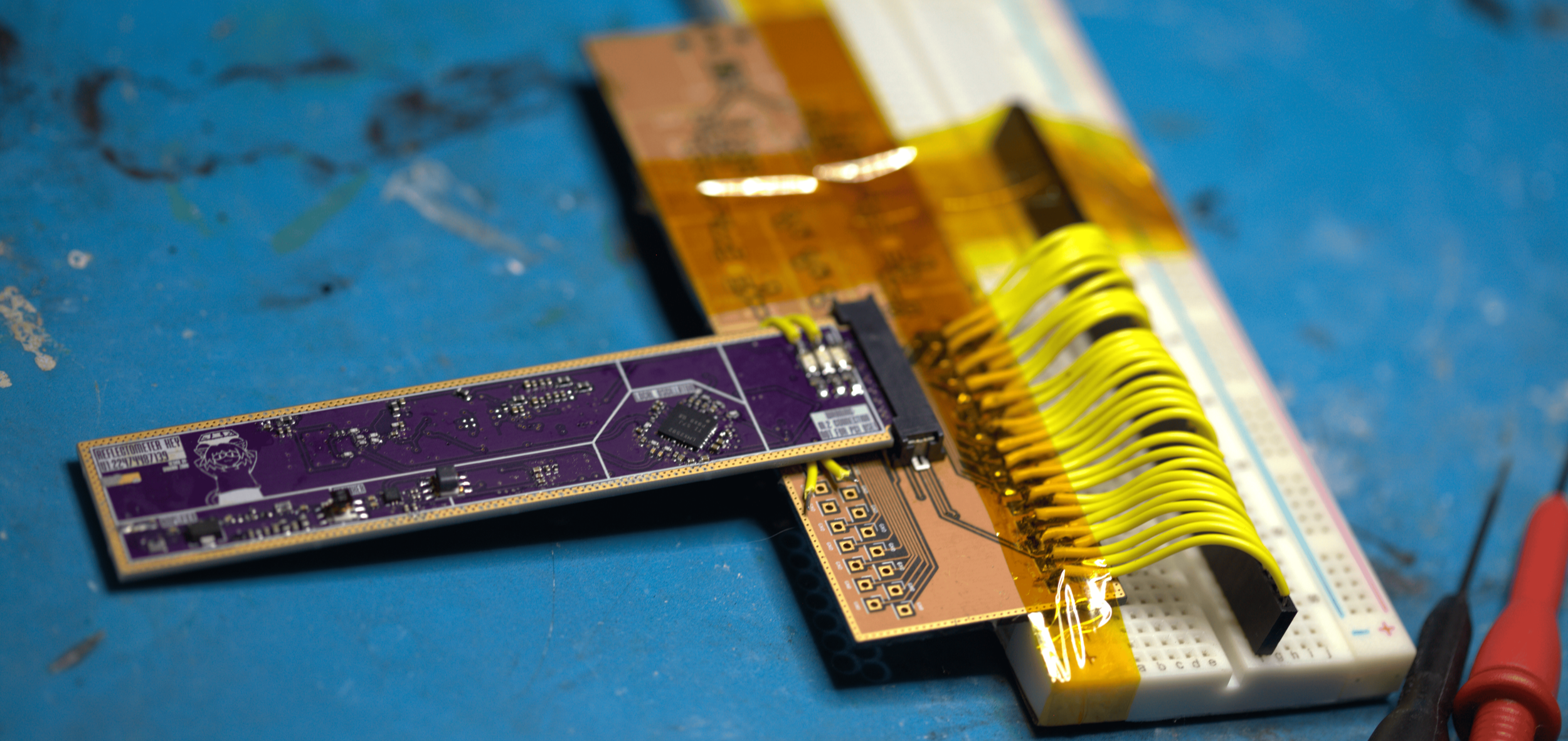
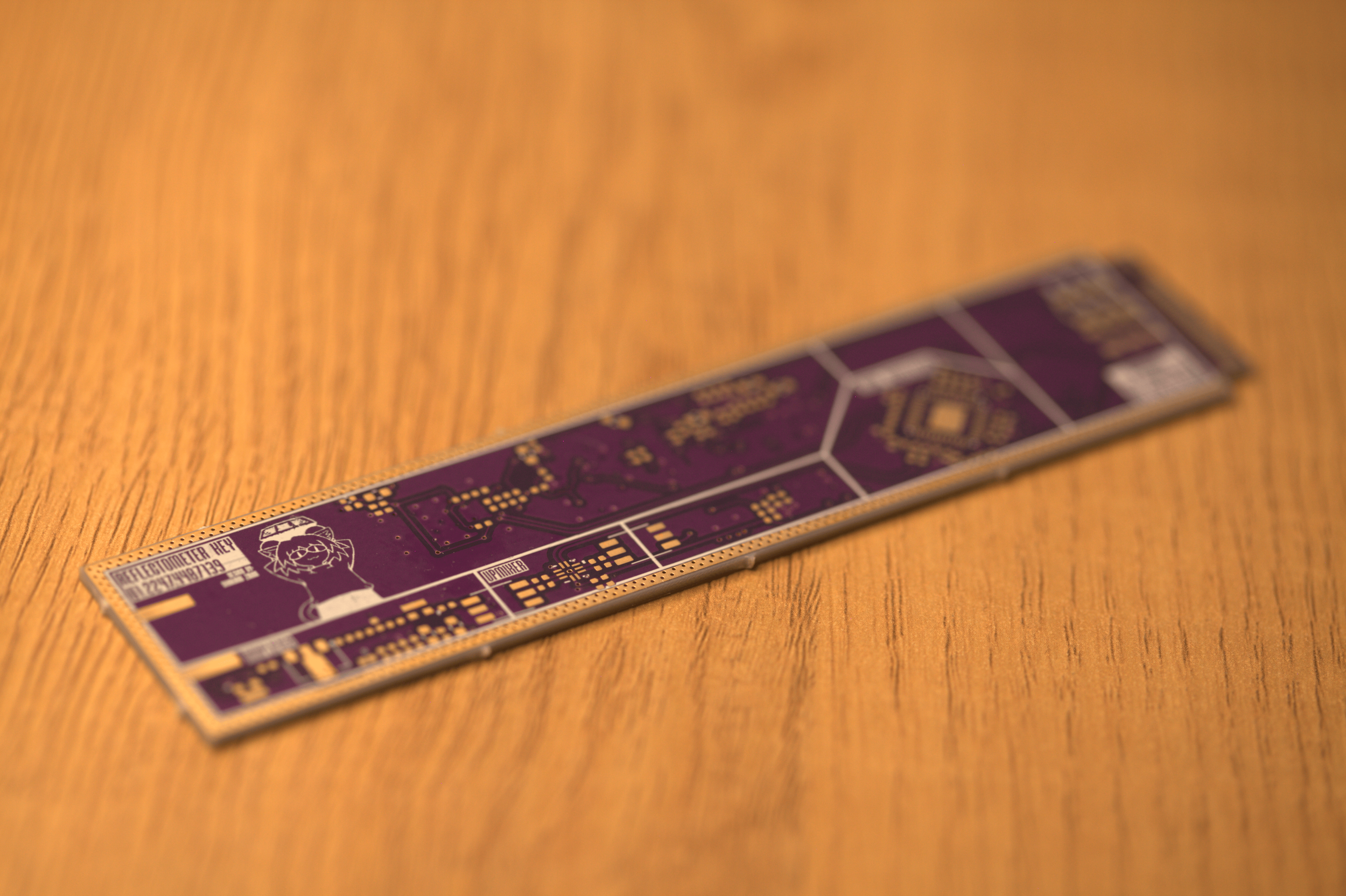
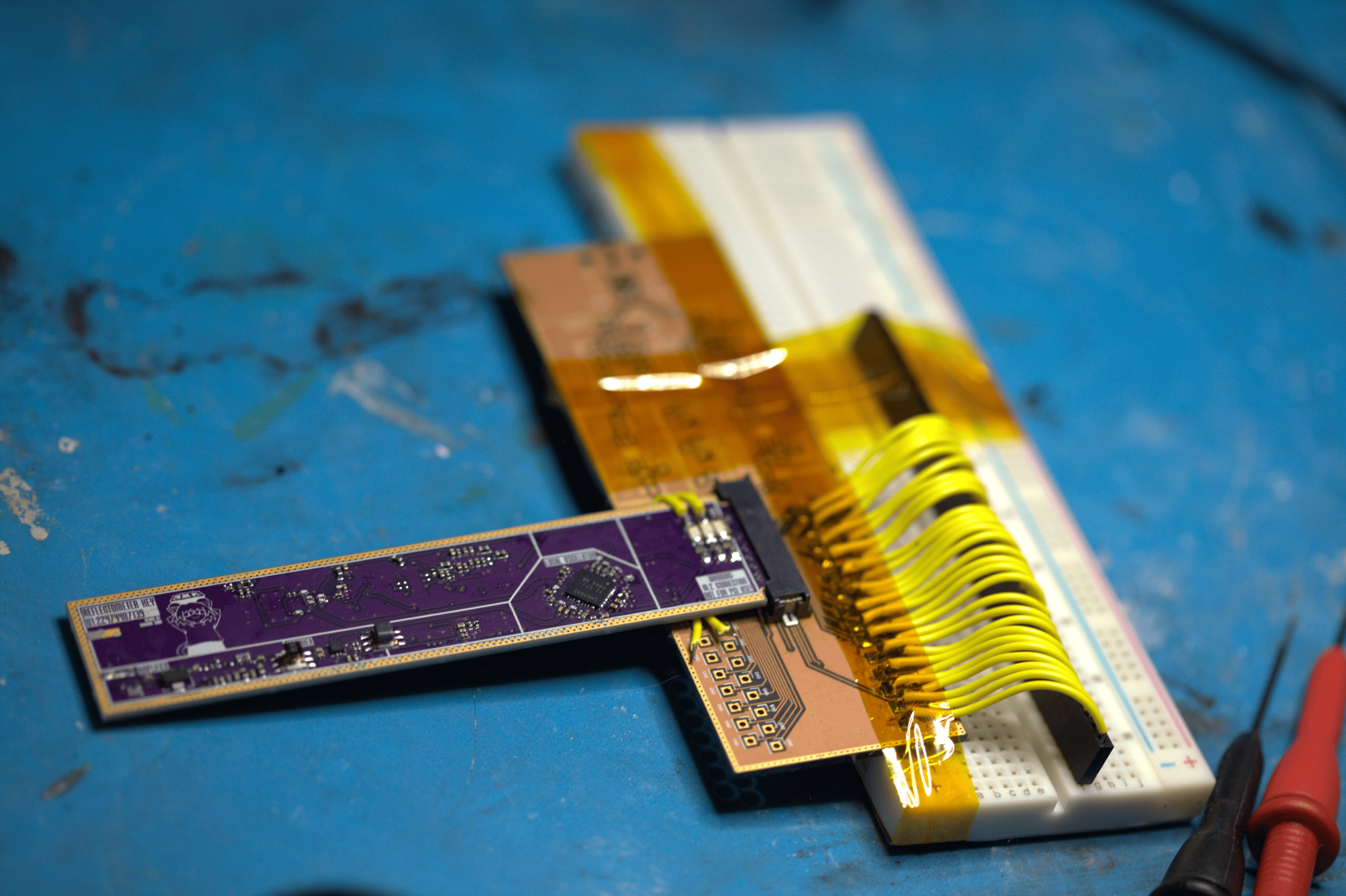
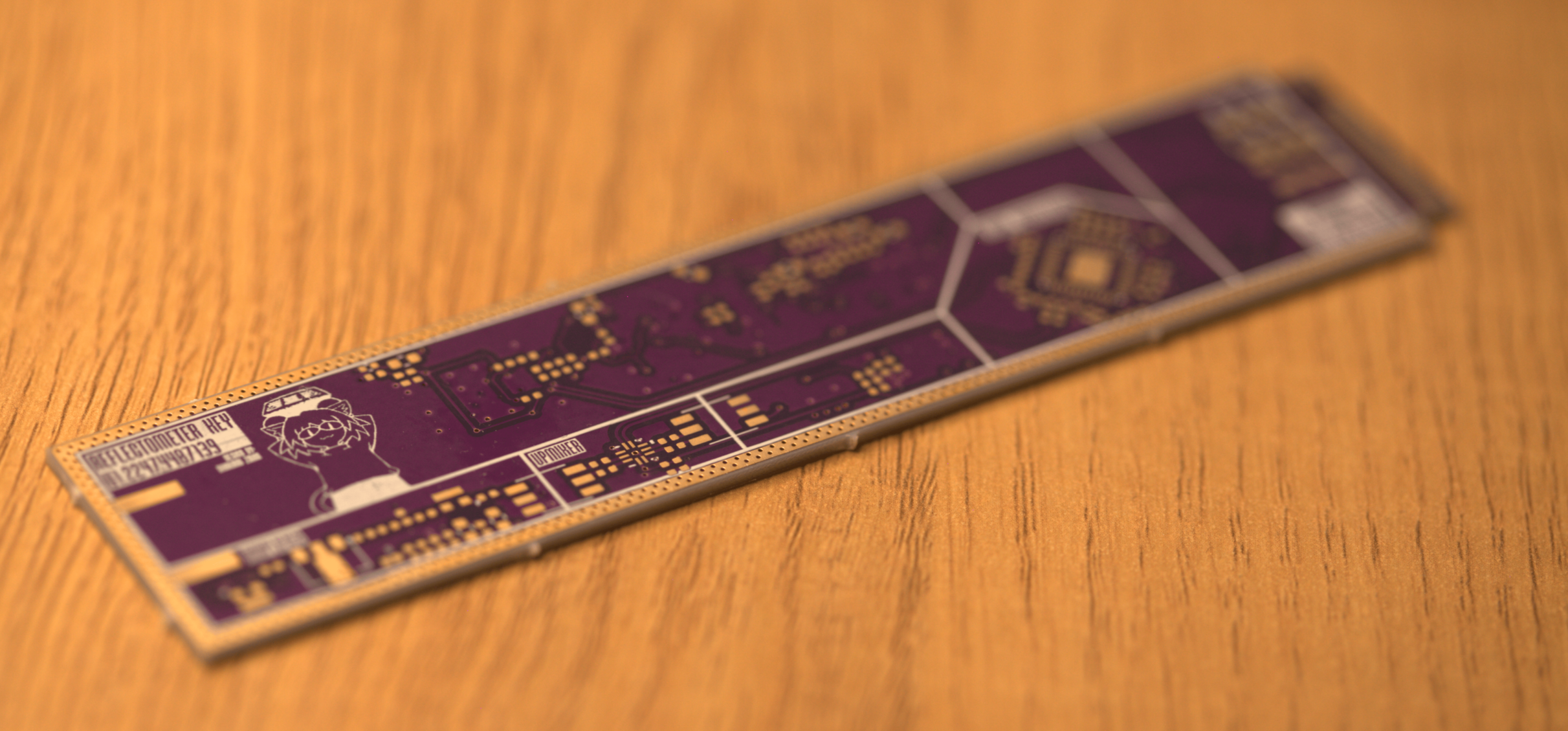
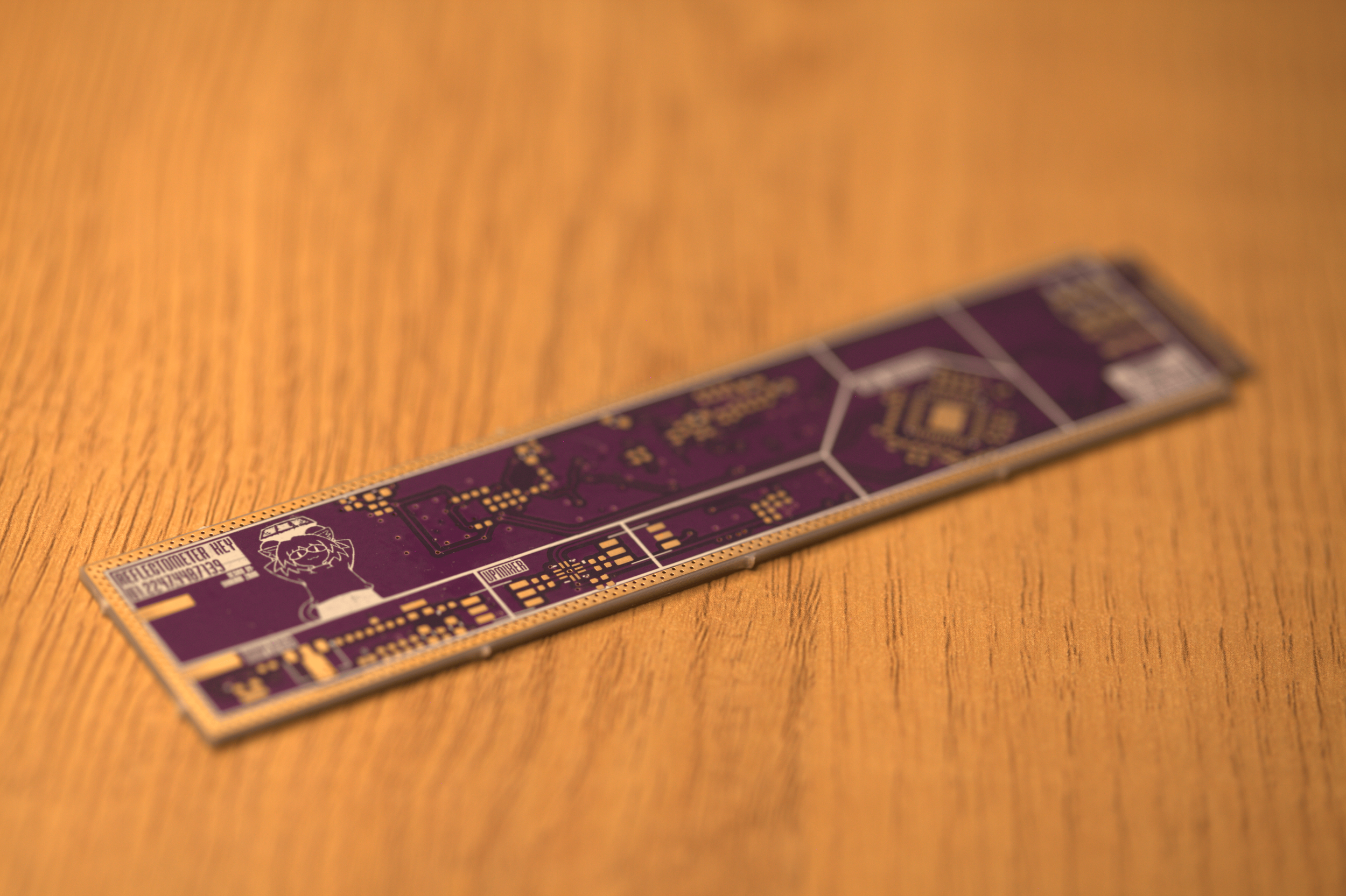
The Reflectometer
The analog RF subsystem is designed in the form of modular cards containing the sensitive RF circuitry, that then interfaces with a main controller system. M.2 was used specifically due to the cheapness and abundance of stock due to the PC market, and personal preference for the style. The signal chain begins on the onboard DAC generating IF, which then mixes with a PLL LO (containing a VCO). This mixed RF signal is then output, reflected by the device I want to test, and then measured as an I/Q pair by coupling physically before the two channels are down-mixed into an ADC. The idea being to compare and contrast the received signal against the one transmitted.
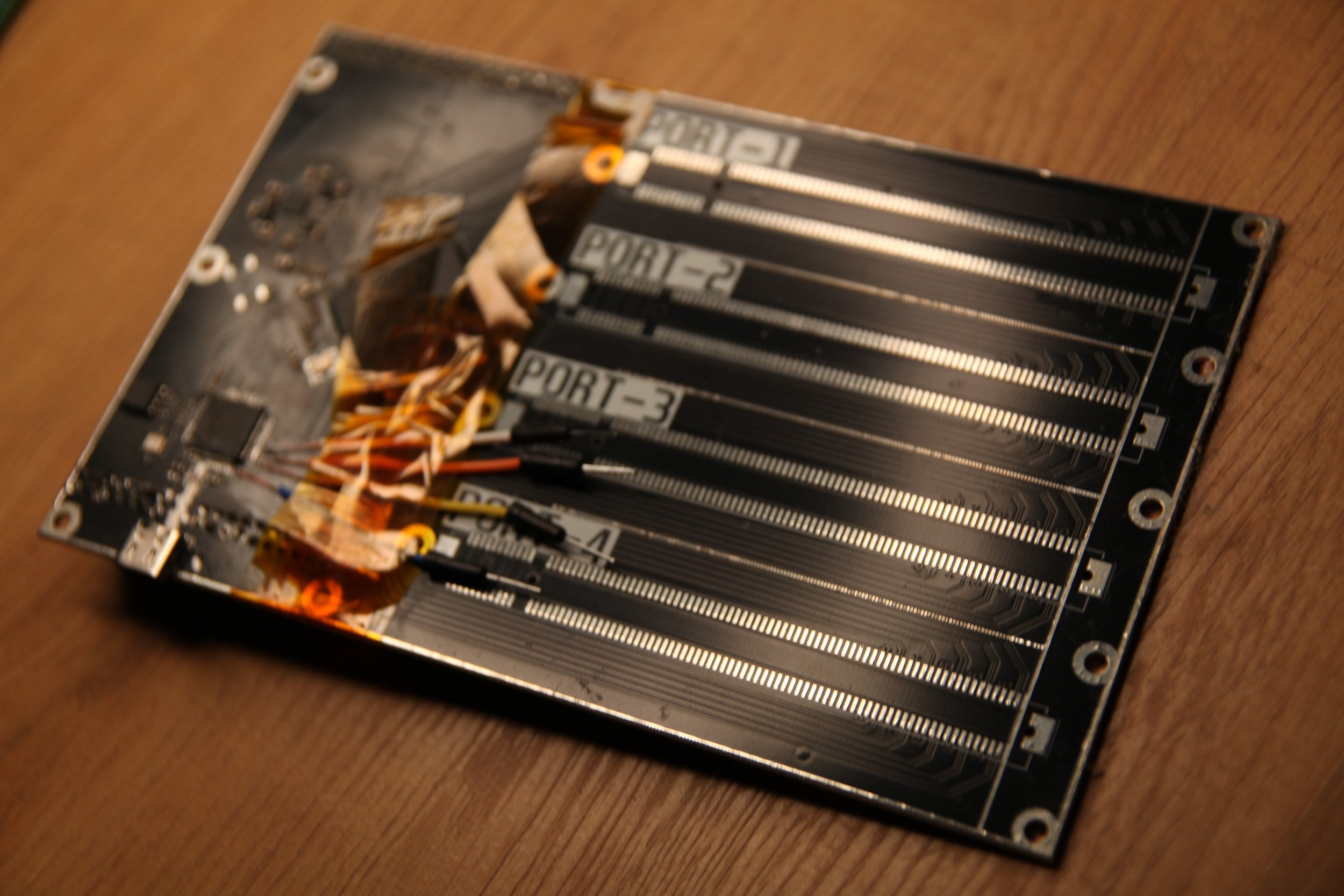
The Case Against Black PCBs…
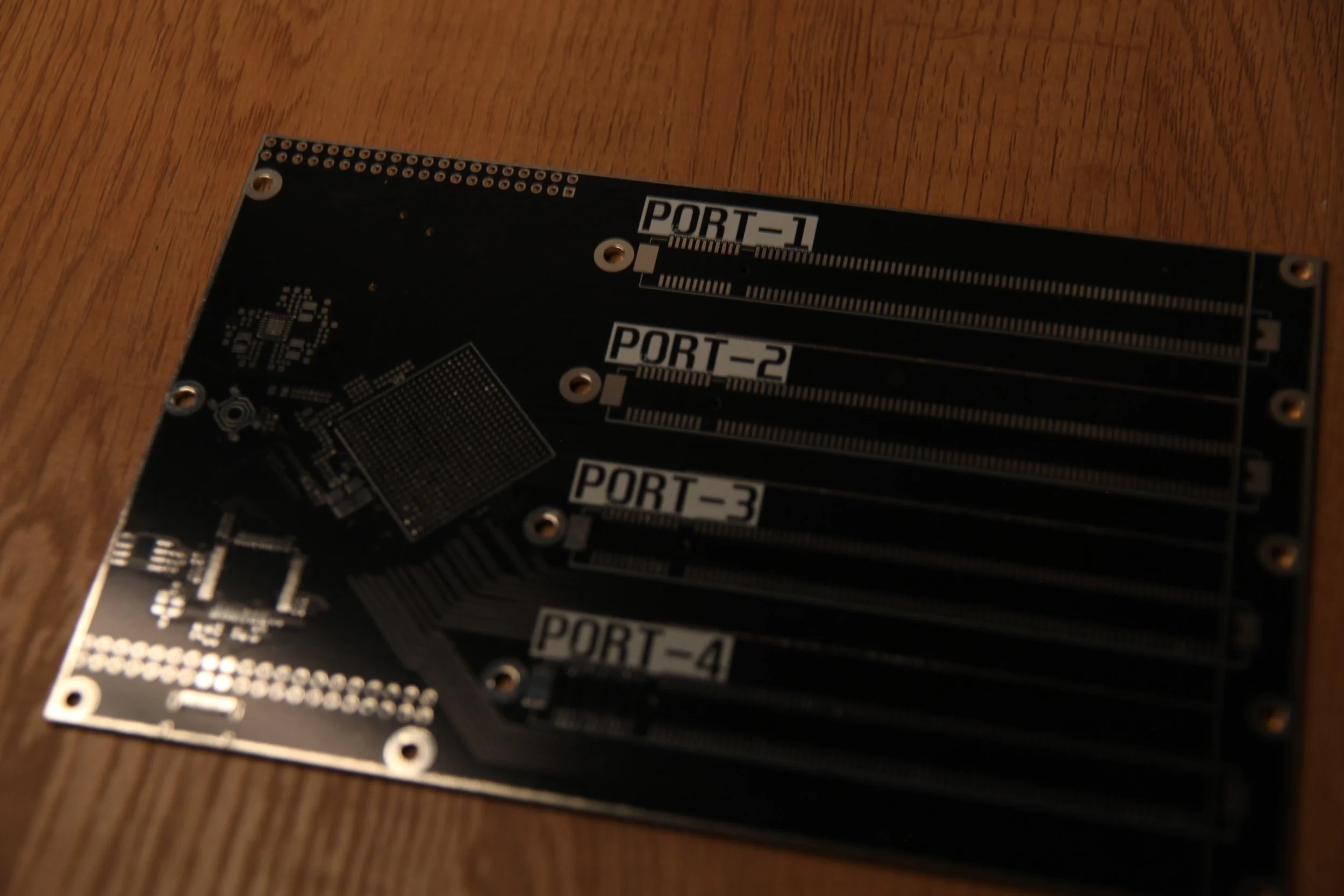
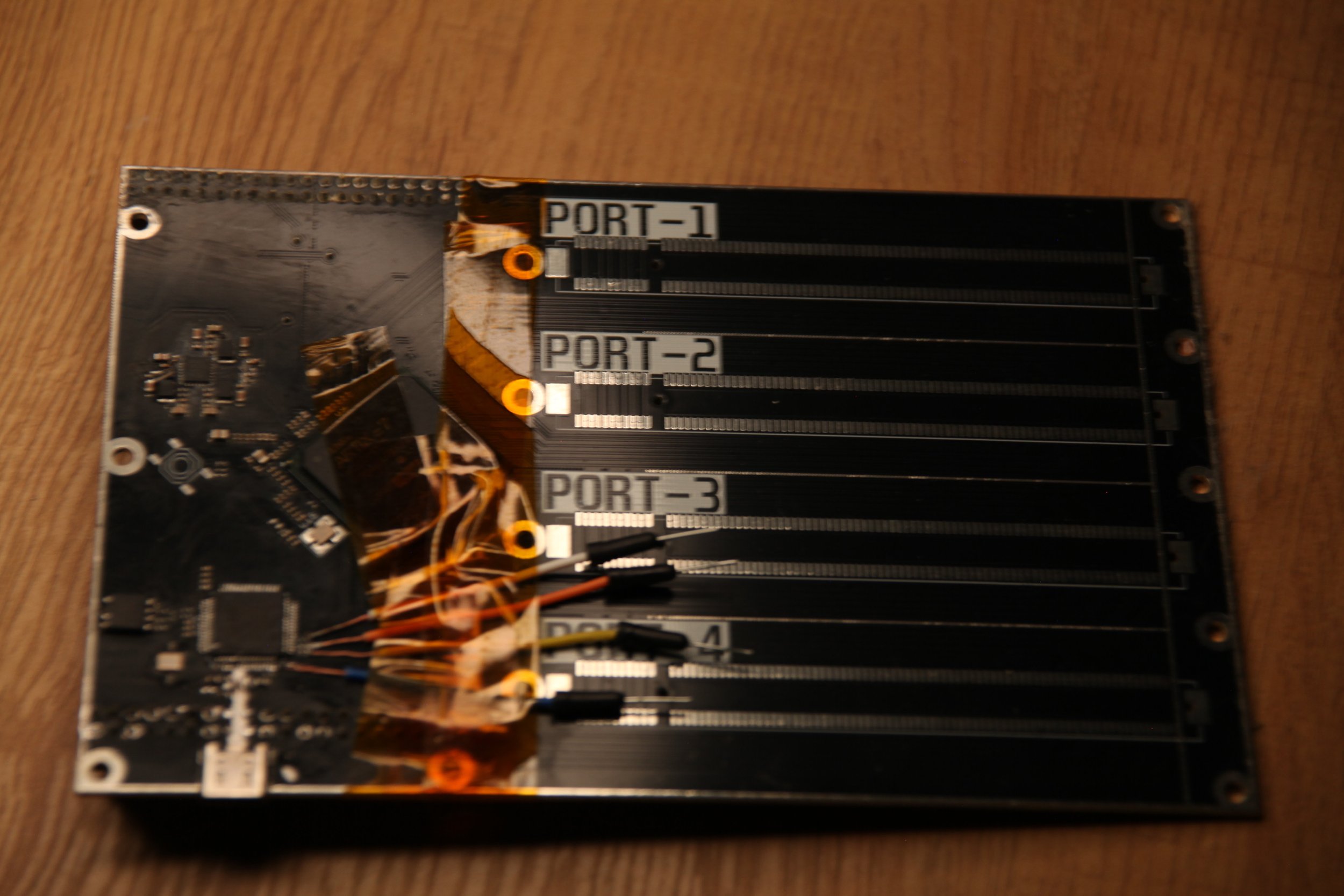
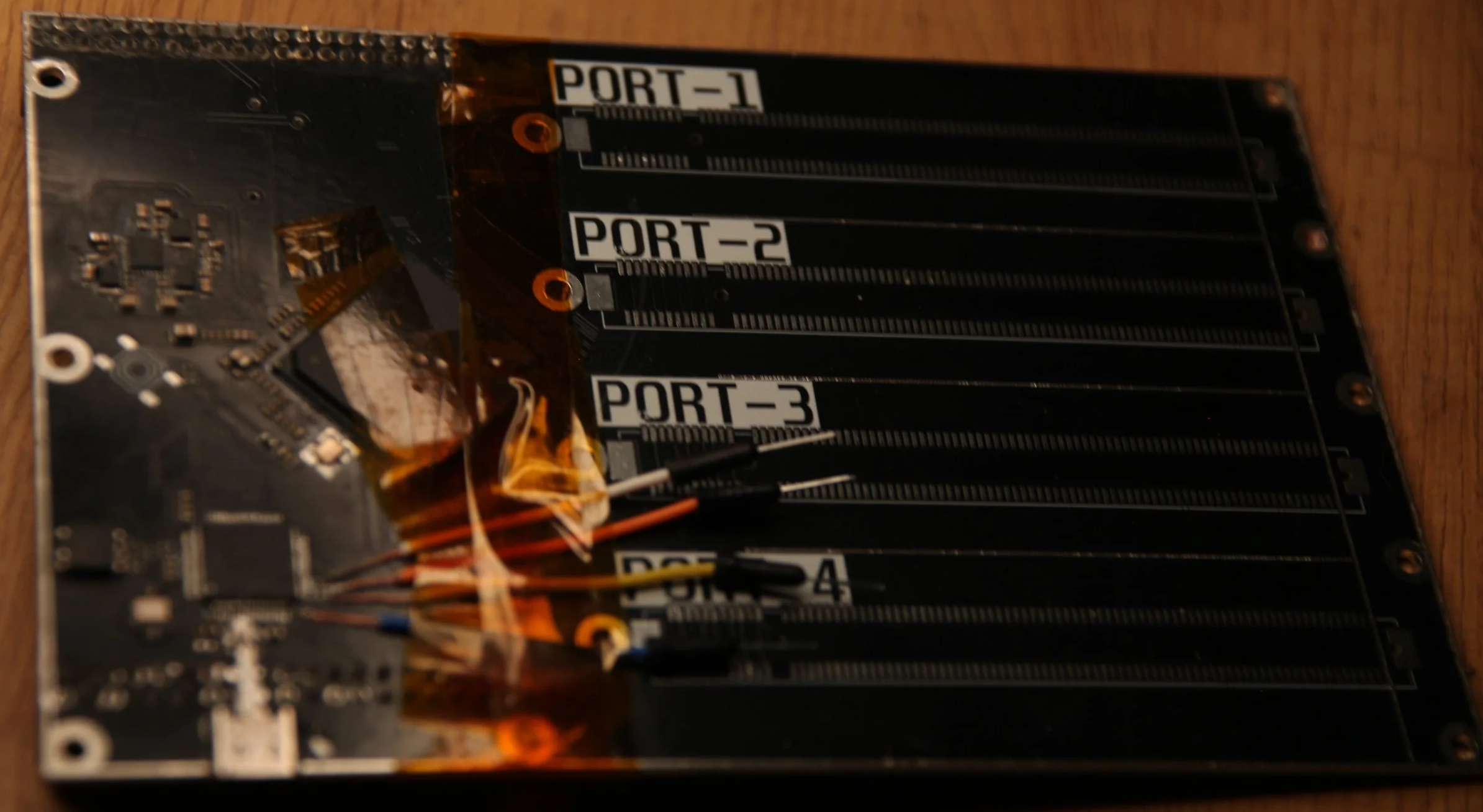
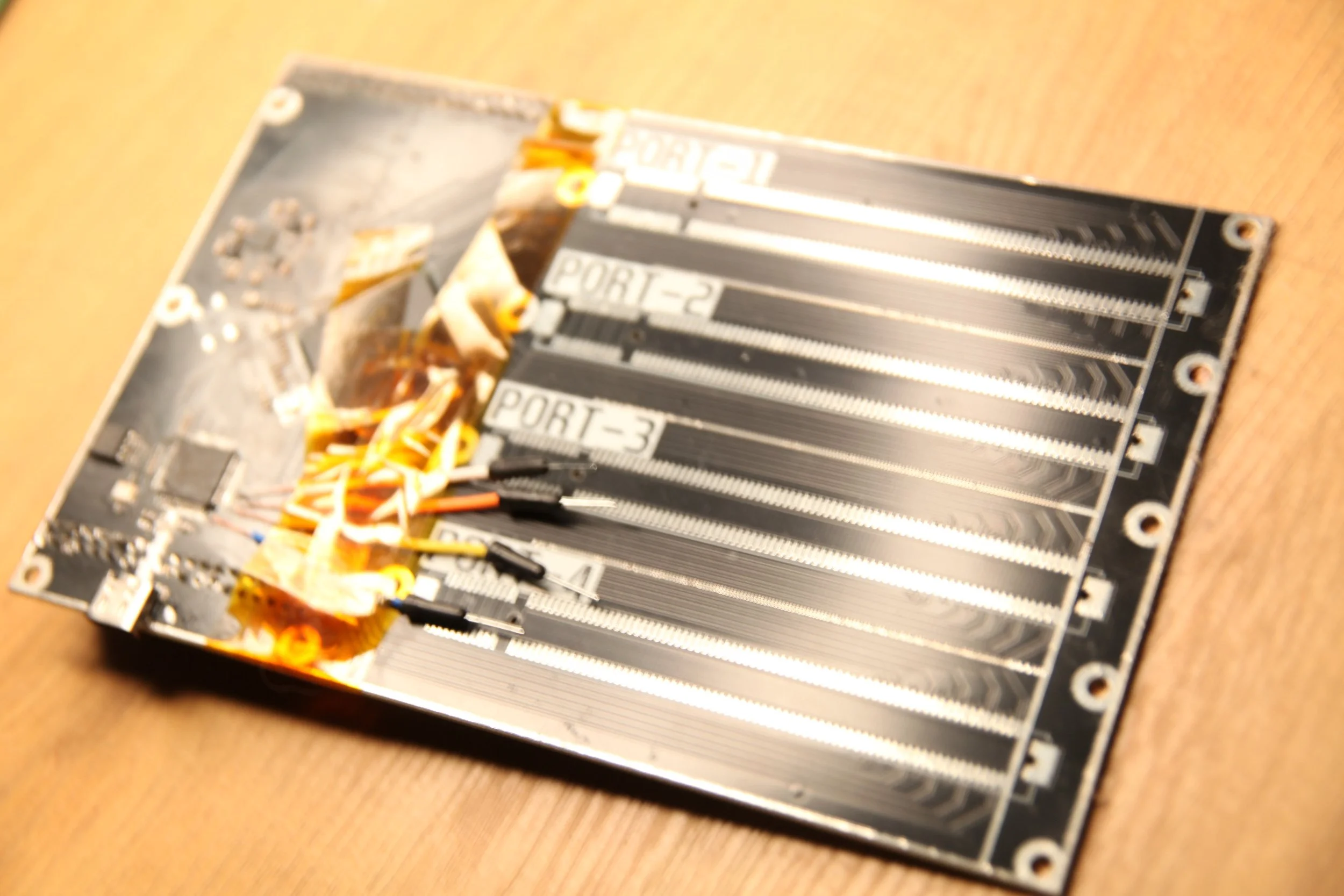
To handle the Reflectometer Modules, and become a sort of “Carrier VNA“, I created this FPGA based controller design. Originally the plan was to have it interface with a raspberry pi or similar SBC that then drove the FPGA. While functional, the rising price of the FTDI chipset needed for use became an issue. The wires pictured needed to be added as a means of flashing the system as a whole. As such, the design is in need of a V2 that I will attempt once Reflectometer testing is completed. Without black pcb substrates this time…
More details currently being debugged and tested… The laundry list of future revisions is extensive, but once operation is confirmed, I intend to work on optimization and protection in the form of adding tunable filter banks as well as limiters and circulators instead of a bidirectional coupler supported via software.